Field report
Dark terrain, bright numbers: Galileo Regio before auction
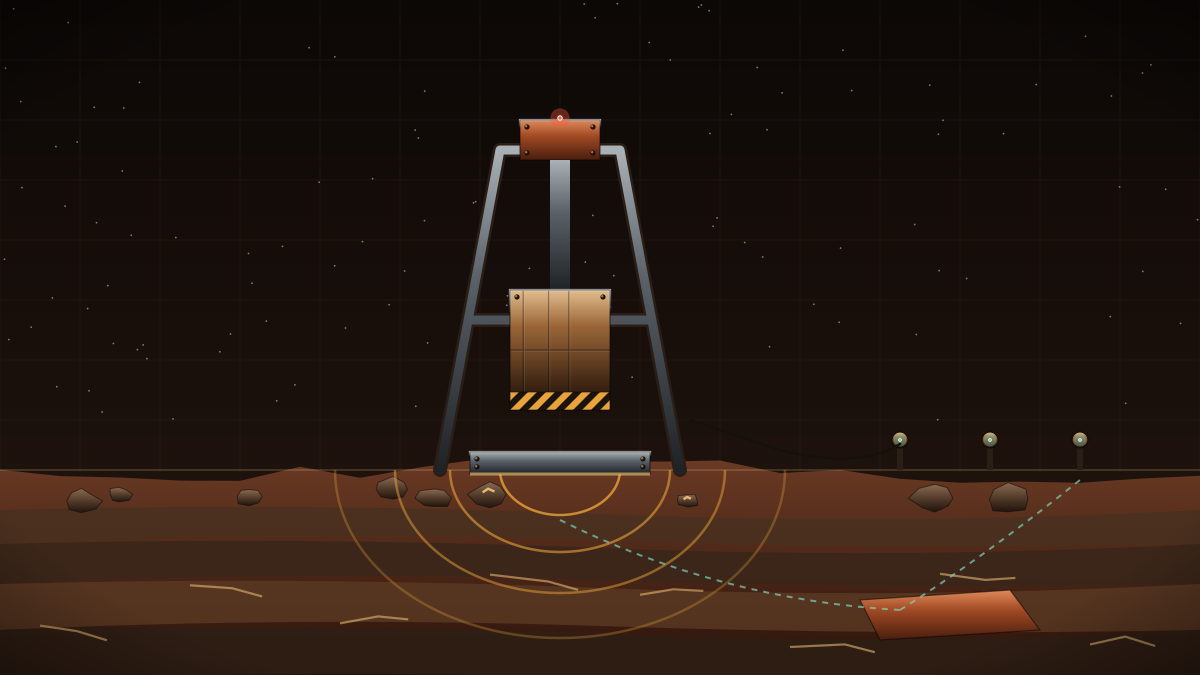
Ganymede's dark terrain is old, cratered and covered in a grimy veneer that hides almost everything. It is also where my team has spent two seasons, because under that dark skin sits a band of rare-earth-rich rock that could matter a great deal to the Ganymede Magnetics Foundry down the road.
We began with a Pickaxe Survey Drone grid to find the magnetic edges of the band, then brought in a Thumper Seismic Mapper to see its shape in depth. Ice-rich ground carries seismic waves beautifully, and the thumper resolved layering from 10 metres to well past 240. The mineralised horizon dips gently east and thickens to about 60 metres in the centre of the claim.
Grades, from 41 short cores and 600 LIBS stations: 1,200 grams per tonne neodymium, 140 g/t dysprosium and 40 g/t scandium. Neodymium and dysprosium are the magnet metals, and scandium is a welcome bonus for aluminium alloys. None of these numbers are spectacular alone, but together, so close to a foundry that wants them, they make a strong package.
What should bidders worry about? Three things. The ice softens near the surface during Ganymede's long day, so heavy plant needs careful foundations. Jupiter's radiation is milder here than on Io or Europa, but it is not trivial. And processing rare earths from icy ore is still experimental; the Sieve Ore-Sorting Rig has not yet been tested on this material.
The auction lot includes all raw seismic data, the drone grids and the core logs. I will be presenting the survey at the Ceres Claims Auction preview, and I am happy to answer technical questions before then.