Equipment
Thumper Seismic Mapper
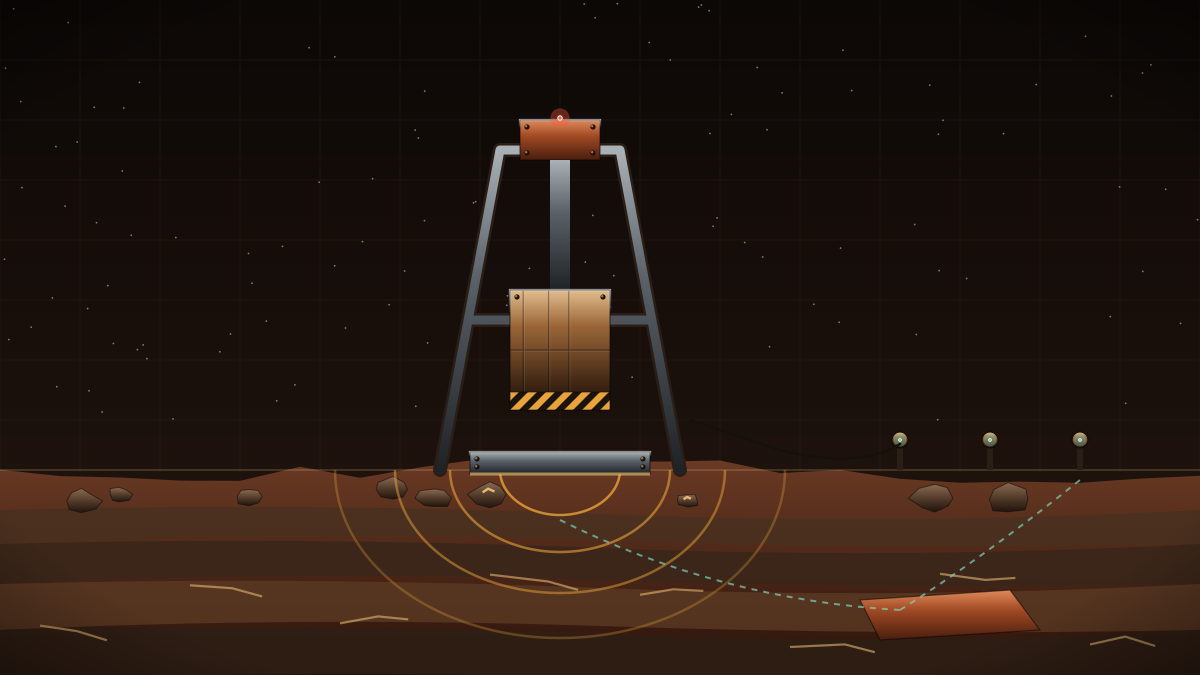
Some deposits hide in structure rather than chemistry: a carbonatite dyke cutting through basalt, a fault that channelled metal-rich fluids, a buried impact melt sheet. The Thumper Seismic Mapper is how the guild finds them. It sends shaped pressure pulses into the ground and records the echoes on a carpet of geophones, building a three-dimensional image of the rock below.
The source unit is a 14-metre tracked sled carrying an electromagnetic hammer that strikes a 4-tonne baseplate every eight seconds. Around it, the crew lays up to 3,600 wireless geophones across a 25 km survey patch. Reflections come back from layers as deep as 6,000 metres, and on Mars the system routinely resolves features only 15 metres thick at that depth.
Two operators run the source and recording truck, and a deployment crew of five plants and recovers the geophones. A methane-oxygen turbine generator provides 260 kW; on Mars and Titan-class bodies the crew can make its own methane, though most jobs run on propellant delivered by Wren Microlifter. The 4,800 kg payload covers the baseplate, geophone spools and the recording cabin.
In service since 8 November 2177, the Thumper is the instrument behind the Tharsis Seismic Volume and the discovery of the Tharsis Dysprosium Dykes. Seismic Survey Lead Sunniva Okafor's team on Ganymede has adapted it for ice by shortening the hammer stroke and stiffening the baseplate, and used it to outline the Galileo Regio Rare Earths prospect.
A Thumper costs 7.3 million credits including 3,600 geophones. Ganymede Magnetics Foundry runs two, and Io Scandium Works keeps one hardened against sulfur dust and radiation.