Field report
Ninety days on the Stickney rim
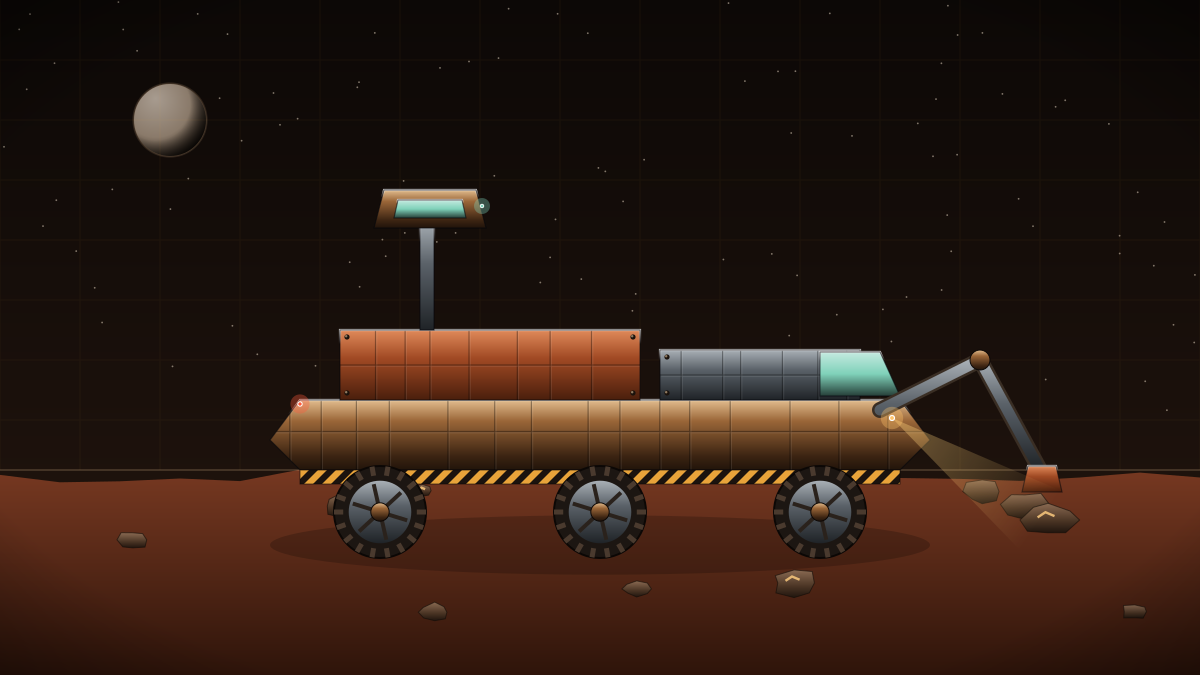
Phobos is a strange place to drive. Gravity is so weak that a careless turn can lift a six-metre rover off its wheels, and Mars hangs so large overhead that you stop noticing it after a week. My crews spent ninety days on the rim of Stickney crater this year, and we came home with the best rare-earth map anyone has drawn of the moon.
We ran two Lodeseeker Prospector Rovers, each with a driver, a navigator and a geologist. The rovers are slow, patient machines: an americium-241 generator feeds them a steady 1.8 kW, enough to crawl 850 kilometres between overhauls, and the ground-penetrating radar sees about 30 metres into the regolith. On Phobos that is plenty, because the neodymium-bearing layer sits in the top sixty metres.
Every 400 metres we stopped, chipped a fresh face and fired the Spectra Assay Lance. Every 2 kilometres we took a short core. By the end we had logged 3,100 stations, and the pattern is clear: a crescent of enriched ejecta along the northern rim, averaging around 1,850 grams per tonne neodymium, 420 g/t praseodymium and 95 g/t dysprosium. Those are excellent numbers for magnet metals.
Logistics made it possible. A Wren Microlifter flew up from Stickney Station every ten days with water, spares and fresh food, and flew back down with 640 kilograms of samples each time. Twice it lifted a rover bodily over a fracture we could not cross. No one on the crew would trade that little lifter for anything.
The data now sits in the Phobos LIBS Assay Atlas, free for anyone to use under CC0. Claim FV-0577 is leased to the Phobos Regolith Syndicate, who will start sorting trials next season. I am already planning the southern rim.