Field report
What the Vesta Gravity Model v3 can and cannot tell you
When we published the first Vesta gravity model in 2181 it had a resolution of four kilometres and a habit of inventing dense bodies where there were none. Version three, released this season under CC-BY-4.0, is a different animal: a 250-metre Bouguer gravity grid covering the whole globe, with density contrast volumes reaching twelve kilometres into the crust.
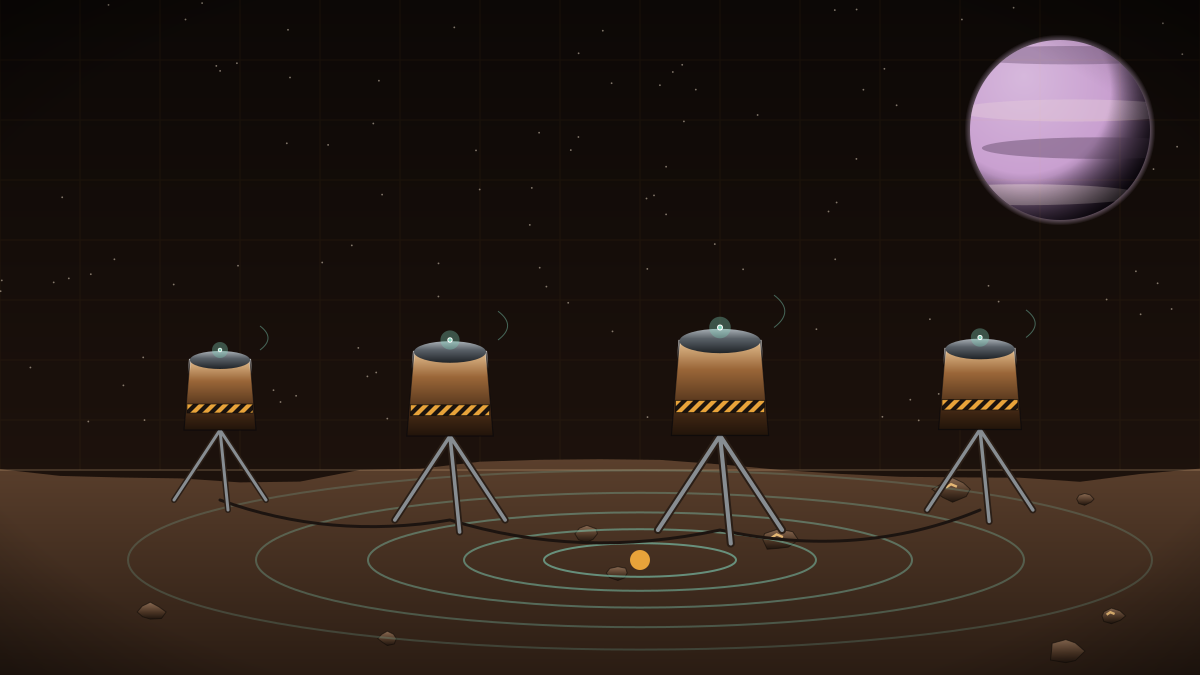
Almost all of the improvement comes from the Gravwell Gradiometer Array. Instead of measuring gravity itself, a gradiometer measures how gravity changes over a short distance, which is far more sensitive to compact, shallow bodies. Our Valkyrie Survey Corvettes fly the 22-metre array in low passes, and its fuel cell stack draws about 46 kW while it records. Over two years the crews logged more than 900 orbits.
What it can tell you: where dense material sits, roughly how big it is, and how deep its top lies. Metal-rich bodies stand out clearly against Vesta's basaltic crust. The model lists 74 metal-body candidates, and Cinder Tor was number three. The Corehound crew has since confirmed it carries 14.2 g/t iridium.
What it cannot tell you: what the dense material is. Gravity cannot distinguish an iridium lode from a lump of barren iron, or from a buried olivine pod. Uncertainty also grows quickly below about six kilometres, and the grid is smoothed near steep basin walls where our flight lines were sparse. Treat the deep layers as hints.
The best results come from combining layers. Overlay the gravity grid on drone magnetometry, check the overlap with a few LIBS readings, and you will have a far better target than any single method gives. Download links and the processing notebooks are on the Guild forge. Report errors to me directly; I read every one.