Field report
Throwing rock away is the cheapest thing we do
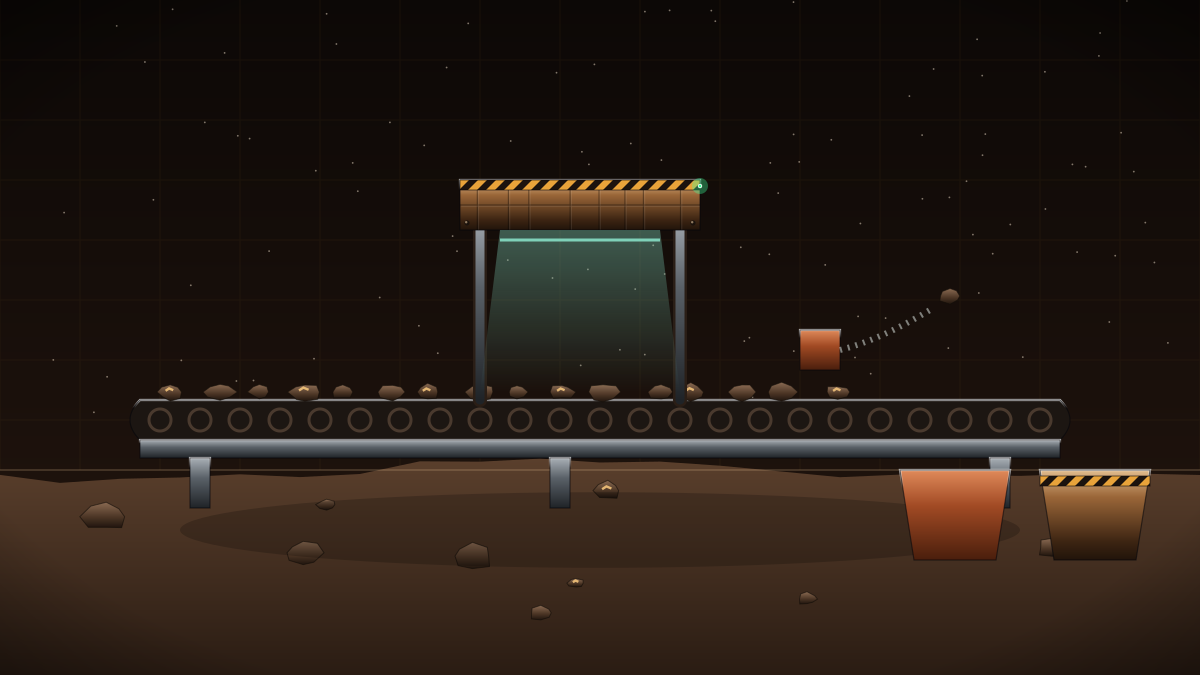
The cheapest tonne of ore is the one you never send to the refinery. That idea sounds obvious, but it took the Guild twenty years to build a machine that acts on it properly. The Sieve Ore-Sorting Rig is that machine, and I have spent six years at the Rheasilvia Toolworks improving it.
The principle is simple. Crushed rock travels along a fast belt beneath two sensors. An X-ray transmission scanner sees which pieces are dense, and a LIBS head borrowed from the Spectra Assay Lance checks what they are made of. Pieces that fail both tests get blown off the belt by a burst of air in a few milliseconds. The rig handles about 40 tonnes an hour and draws 640 kW from the refinery power bus, with a fuel cell for backup.
In practice, a typical Belt ore feed is about 60 per cent waste. If the sorter removes most of that, the refinery processes roughly half the rock for almost the same metal. At the Ferric Twins, Maren Adebayo-Cruz saw batch grades rise by about a third once our rig went in. Power, reagents and crew time all drop.
The hard part is calibration. Every deposit is different. Vesta breccia, Phobos regolith and Io's sulfur-rich crust all look different to the scanner, so each new site needs a week of test runs with hand-checked samples before the sorter can be trusted. The Io Scandium Works rig took nearly a month to tune because of the sulfur.
We have nine rigs in the field now, and Olympus Ring Alloyworks runs two more. If you are planning a new mine, design the sorter in from the start. It is far cheaper than retrofitting one later.