Equipment
Claimstake Survey Marker
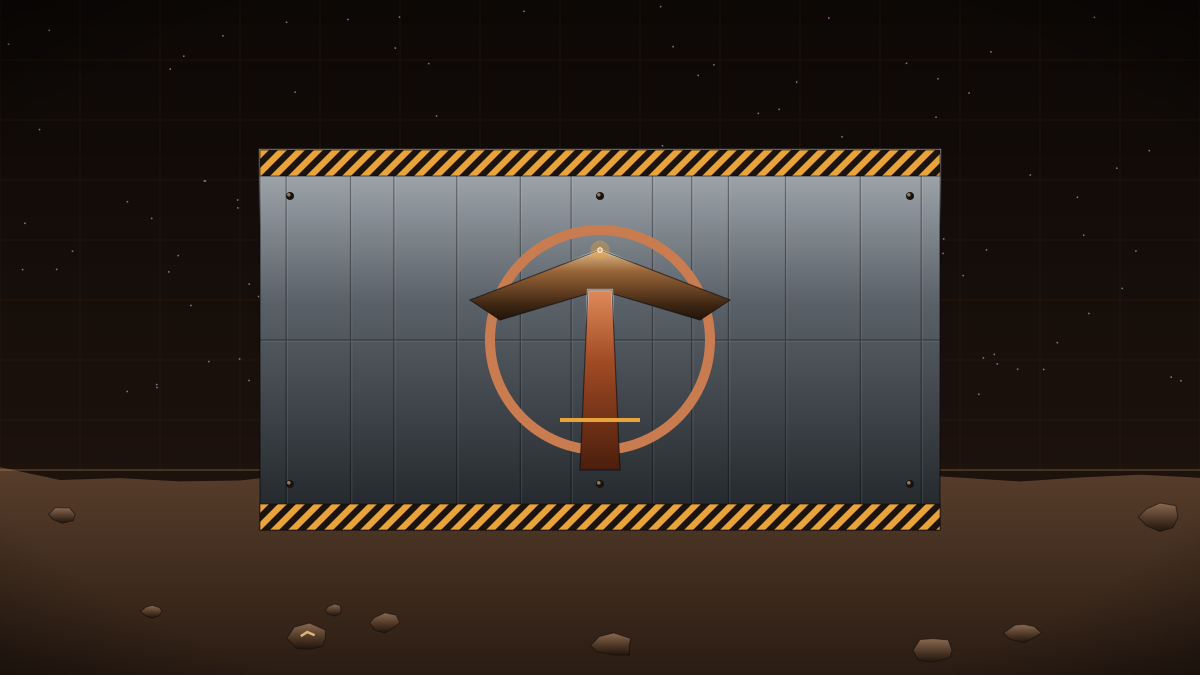
Before a deposit can be mined, sold or auctioned, someone has to stake it. The Claimstake Survey Marker is the guild's oldest product and the reason many prospectors joined in the first place. It entered service on 28 February 2166, two years after the guild was founded, and the basic design has hardly changed.
Each marker is a two-metre titanium stake weighing 12 kg, driven 3 metres into the surface with a hand-held driver. At the top sits a transponder powered by a betavoltaic tritium cell that draws only 0.004 kW and will keep broadcasting for more than 25 years. Its signed position beacon can be heard from 40 km away, so survey drones, passing ships and rival crews all know exactly where a claim boundary lies.
One person can place a marker, though the Claims Office recommends a witness. A typical claim uses four to twelve markers, and their positions are registered automatically with the open ClaimGrid Boundary Mapper, which checks for overlaps and alerts both parties if two claims collide. Claims Registrar Nadia El-Amin calls the marker 'the cheapest lawyer you will ever hire'.
Markers are dropped from the cabin of a Wren Microlifter or placed by rover crews on foot. The Ceres Free Claimholders' Mutual has bought more than 900, and every lot at the Ceres Claims Auction lists the marker serial numbers that define it.
A marker costs 0.2 million credits, the cheapest item in the catalogue, including registration with the Claims Office on Ceres.